
Patellar Tendinopathy Treatment: What Actually Works
Progressive tendon-loading exercise, not rest, is the treatment that fixes patellar tendinopathy. Systematic reviews and clinical consensus point to eccentric loading, heavy slow resistance, and isometric training as the core, evidence-backed therapy, with injections and surgery reserved for cases that don’t respond after months of real effort. Isometric holds are your best tool for calming pain in the first few weeks, but they’re a bridge, not the destination.
Here’s the realistic starting point:
- Begin a structured, progressive loading program, ideally supervised by a physical therapist or chiropractor familiar with tendon rehab.
- Use isometric exercises for short-term pain control while you build tolerance for heavier work.
- Modify aggravating activities (jumping, deep squats, sprinting) instead of stopping activity entirely.
- Expect a multi-month process. Tendon tissue remodels slowly, and rushing it usually causes setbacks.
A quick fact that surprises most patients: patellar tendinopathy isn’t primarily an inflammatory condition. It’s a degenerative change in the tendon’s collagen structure, which is exactly why anti-inflammatory approaches alone rarely solve it. The tendon needs mechanical stress, applied correctly, to rebuild itself.
Key Takeaways
Progressive tendon-loading exercise, delivered through eccentric, heavy slow resistance, or isometric protocols, remains the most effective and best-supported treatment for patellar tendinopathy.
| Point | Details |
|---|---|
| Exercise comes first | Eccentric, HSR, and isometric loading outperform passive treatments and address the tendon’s actual collagen pathology. |
| Isometrics manage pain, not structure | Isometric holds ease pain quickly but don’t replace the strength-building work of eccentric or HSR training. |
| Progress by symptoms, not the calendar | Advance load only when next-day pain stays at 3/10 or lower and resolves within 24 hours. |
| Avoid corticosteroids near the tendon | Steroid injections relieve pain short-term but raise the risk of tendon weakening and rupture. |
| Surgery is a last resort | Surgical options are typically considered only after 6 to 12 months of consistent, failed conservative treatment. |
| Thetxroom offers hands-on, loading-based care | Thetxroom pairs Fascial Distortion Model assessment with individualized progressive rehab plans for tendon recovery. |
Table of Contents
- What Is the Best Patellar Tendinopathy Treatment Approach?
- How Do You Exercise Your Way Out of Patellar Tendinopathy?
- How Should You Manage Load Through Recovery?
- Which Adjunct Therapies Actually Help With Knee Tendon Pain?
- When Does Patellar Tendinopathy Need Surgery?
- What Should Daily Self-Care Look Like During Recovery?
- How The Tx Room Treats Patellar Tendinopathy
- Why the Standard Advice Undersells the Hard Part
- Get Hands-On Help Alongside Your Loading Program
- Frequently Asked Questions About Patellar Tendinopathy Treatment
- Sources
What Is the Best Patellar Tendinopathy Treatment Approach?
Exercise-based loading sits at the top of the treatment hierarchy, and everything else, straps, injections, shockwave therapy, surgery, plays a supporting role at best. That’s not a preference. It reflects what the research actually shows works and what doesn’t.
The tendon problem behind jumper’s knee is structural. Repeated high-load activities like jumping and sprinting create tiny areas of collagen disorganization inside the tendon, particularly at the lower pole of the patella. Since inflammation isn’t the primary driver, treatments built around reducing swelling, ice, NSAIDs, cortisone, address the wrong mechanism. What actually helps is controlled mechanical loading that stimulates the tendon to reorganize its collagen fibers and rebuild capacity.
That’s why every major clinical practice guideline puts exercise therapy first. A network meta-analysis of interventions for patellar tendinopathy confirms eccentric loading remains the benchmark treatment, while adjuncts like topical glyceryl trinitrate and hyaluronic acid injections show only low-quality evidence of added benefit, and extracorporeal shockwave therapy (ESWT) delivers limited, inconsistent results at best.
Here’s roughly how the evidence stacks up:
- Progressive loading exercise (eccentric, HSR, isometric): strong evidence, first-line for essentially everyone.
- Patellar straps, taping, activity modification: reasonable short-term support, no evidence they change tendon structure.
- ESWT: mixed results, modest effect at best, not a standalone fix.
- PRP injections: inconsistent outcomes across studies, occasionally helpful as an adjunct after loading has failed.
- Corticosteroid injections: short-term pain relief but real risk of tendon weakening, generally discouraged.
- Surgery: effective for a small subset of refractory cases, not a first or second option.
One thing worth knowing before you go further: a recent review of high-quality trials found that even though many adjunct therapies show promise in individual studies, the overall evidence quality is uneven, and clinicians typically pair them with loading programs rather than relying on them alone.
Imaging (ultrasound or MRI) usually isn’t necessary for a straightforward diagnosis based on history and physical exam. It becomes useful if symptoms don’t improve after several months of appropriate loading, if there’s suspicion of a partial tear, or if the diagnosis is unclear. At that point, referral to a sports medicine physician or orthopedic specialist makes sense, especially if injection therapy or surgical evaluation is on the table.
How Do You Exercise Your Way Out of Patellar Tendinopathy?
Three exercise formats dominate patellar tendinopathy rehab: eccentric decline squats, heavy slow resistance (HSR) training, and isometric holds. Each has a distinct job, and knowing when to use which one is the difference between a program that works and one that just keeps you sore.
Eccentric decline squats
This is the original, most-studied protocol for jumper’s knee. You perform single-leg squats on a 25 degree decline board, focusing on the lowering (eccentric) phase while a therapist or the opposite leg assists on the way up. A typical program runs:
- Weeks 1 to 2: 3 sets of 15 reps, twice daily, body weight only, focusing on slow, controlled descent.
- Weeks 3 to 6: Same volume, add external load (a backpack or weighted vest) as tolerated.
- Weeks 7 to 12: Progress load further, reduce frequency to once daily as strength and tolerance improve, and begin introducing more functional movements.
Decline squats work best for patients with irritable, reactive tendons who need a familiar, well-tested entry point. The decline angle increases load specifically on the patellar tendon, which is the point.
Heavy slow resistance training
HSR has become the preferred alternative for many clinicians because it’s easier to tolerate and doesn’t require a decline board. You use standard gym equipment, leg press, squat rack, or a Smith machine, and perform both the lowering and lifting phases slowly, typically a 3 second down, 3 second up tempo.
A common HSR progression looks like this:
- Weeks 1 to 4: 4 sets of 15 reps at roughly 60 percent of your one-rep max, three sessions per week with a rest day between sessions.
- Weeks 5 to 8: Drop to 4 sets of 10 reps, increase load to around 70 to 80 percent of one-rep max.
- Weeks 9 to 12: 4 sets of 6 to 8 reps at 85 to 90 percent of one-rep max, focusing on strength gains rather than endurance.
HSR tends to suit athletes who need to maintain strength during rehab, since it more closely mimics gym-based training they’re already familiar with, and many patients find it less irritating day-to-day than decline squats.
Isometric holds for immediate pain relief
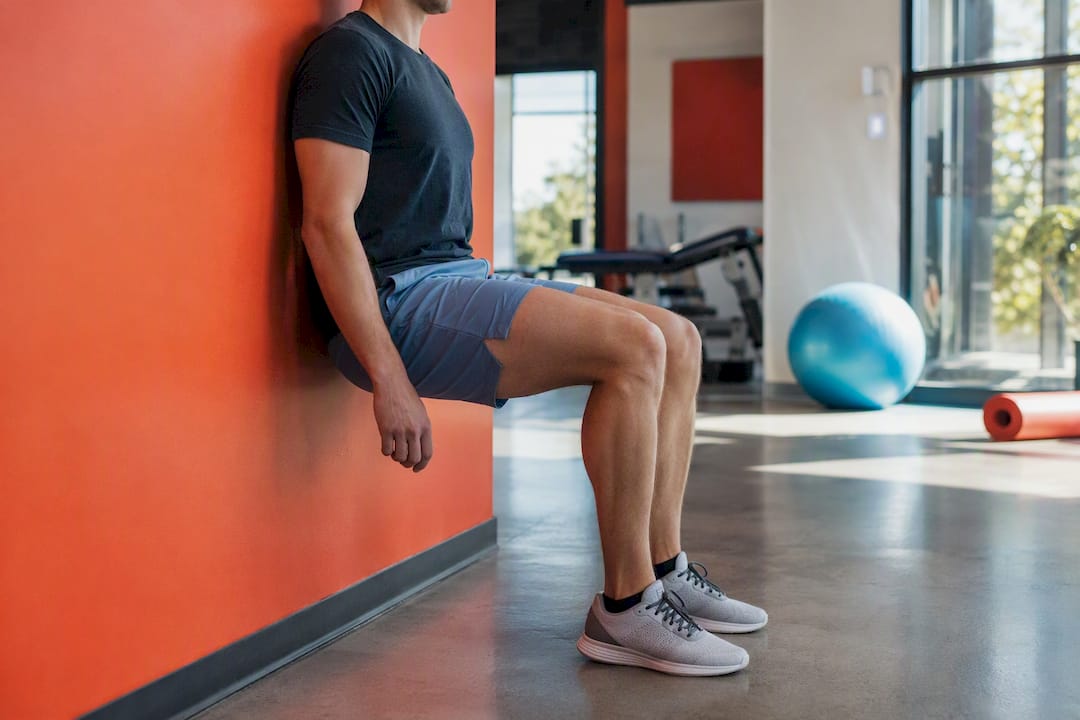
Isometrics are the tool you reach for when pain is limiting everything else. Holding a muscle contraction without joint movement, think a wall sit or a Spanish squat, at roughly 70 percent effort for 45 seconds, repeated 4 to 5 times, reduces tendon pain in the short term about as effectively as isotonic exercise. The catch is that this pain relief doesn’t necessarily translate into long-term tendon remodeling. Isometrics buy you comfort and function while you build toward heavier loading, not a replacement for it.
Sequencing it all together
Most rehab plans follow a rough sequence: isometrics for early pain control, moving into either eccentric decline squats or HSR (rarely both at once) as the primary structural loading, and functional or plyometric work added only once strength and pain tolerance allow. The choice between eccentric and HSR often comes down to access to equipment, athlete preference, and how reactive the tendon currently is.
The single most important progression rule doesn’t come from a calendar. It comes from your body’s response. Rehab progression should track symptom response rather than a fixed weekly schedule: if pain the morning after a session sits at or below a 3 or 4 out of 10 and settles within 24 hours, you can progress load. If pain spikes higher or lingers into the next day, hold at the current level or dial back slightly before trying again.
Pro Tip: Keep a simple notebook or phone note rating your pain immediately after training and again the next morning. That one habit does more to guide safe progression than any preset program, because it tells you exactly when your tendon is ready for more.
How Should You Manage Load Through Recovery?
Recovery from tendonitis in the patellar tendon isn’t a straight line from “hurt” to “fixed.” It moves through phases, and trying to skip ahead is the most common way people set themselves back weeks.
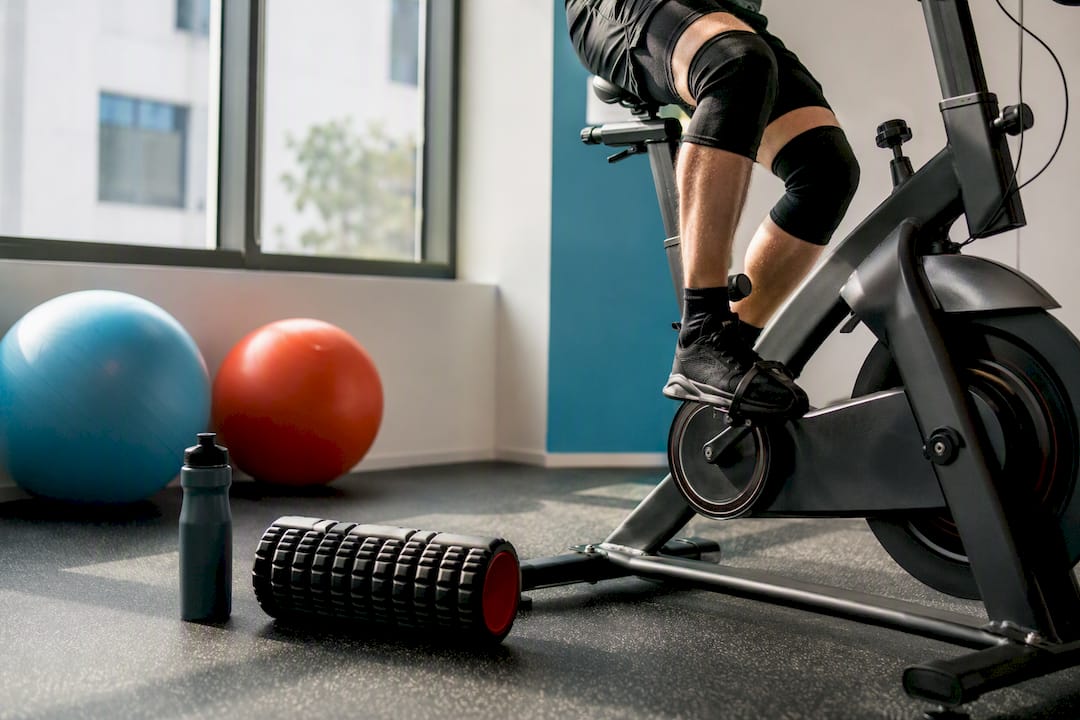
Phase 1: Calm things down. The goal here isn’t rest, it’s smart activity modification. Cut out or reduce jumping, sprinting, deep squatting, and anything that reproduces sharp pain, but stay active. Cycling, swimming, and pool-based work keep your cardiovascular fitness and general leg strength intact without loading the tendon in the way that aggravates it. NHS physiotherapy guidance is explicit on this point: complete rest tends to backfire, since tendons need some mechanical input to stay healthy, and total inactivity can make the eventual return to loading harder.
Phase 2: Rebuild capacity. Once daily pain is manageable and isometrics feel tolerable, shift into eccentric or HSR training as described above. Volume and load increase gradually over roughly 8 to 12 weeks, with strength testing (comparing the affected leg to the unaffected one) as a useful checkpoint around the two-month mark.
Phase 3: Return to sport. This phase introduces plyometrics, jumping and landing drills, change-of-direction work, and sport-specific movement patterns. It’s also where return-to-play testing matters most.
Metrics that signal you’re ready to advance:
- Morning-after pain consistently at 3/10 or lower following training sessions.
- Single-leg strength within roughly 10 to 15 percent of the uninjured leg.
- Ability to complete sport-specific movements (hopping, landing, cutting) without pain or compensation.
- Confidence in the joint under load, not just absence of pain at rest.
Which Adjunct Therapies Actually Help With Knee Tendon Pain?
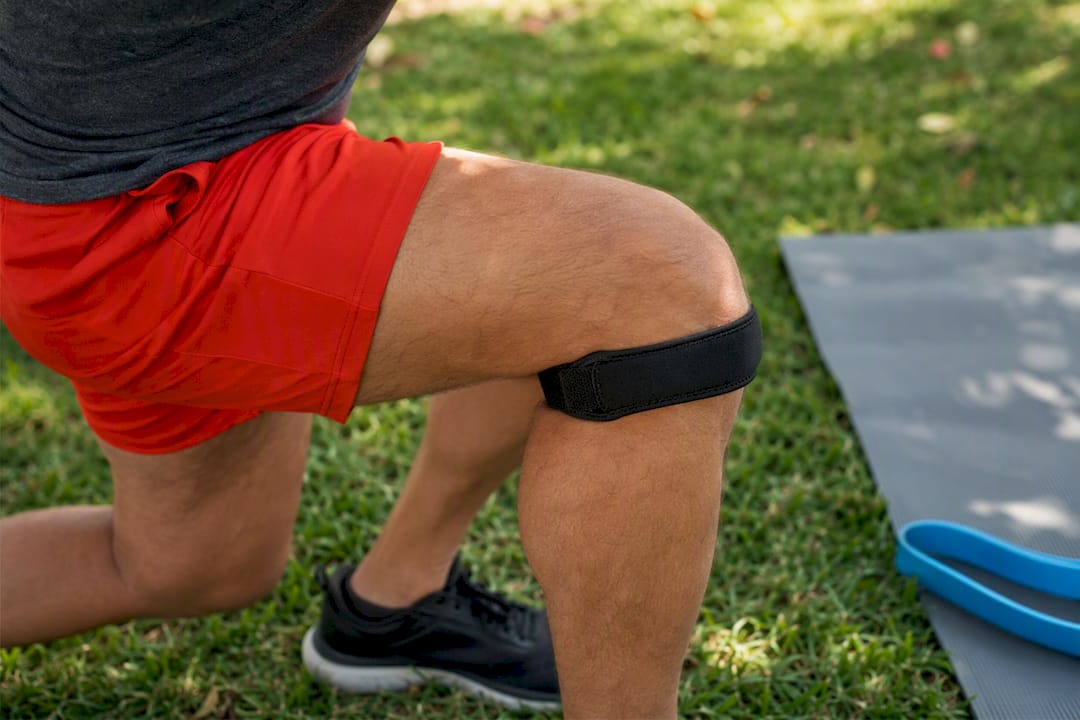
A patellar strap or a piece of kinesiology tape won’t fix the tendon, but it can make training more tolerable. The strap works by altering the angle of pull on the patellar tendon, which shifts load slightly away from the most irritated area. Straps and taping are legitimate short-term tools for training sessions and competition, but they don’t change the tendon’s structure or speed remodeling.
Cryotherapy (icing) and over-the-counter analgesics can dull pain enough to get through a tough day, particularly right after a flare-up. Use them situationally, not as your core strategy, since numbing pain without addressing load doesn’t move you toward recovery.
ESWT and PRP occupy a gray zone. Both show up in the literature as reasonable adjuncts to consider if you’ve completed a genuine trial of progressive loading, generally around 12 weeks, without meaningful improvement. Evidence for PRP is inconsistent: some series using ultrasound-guided, leukocyte-rich PRP report better outcomes, but results vary enough across studies that it shouldn’t be framed as a guaranteed fix. Topical glyceryl trinitrate and hyaluronic acid injections carry low or very-low strength evidence for adjunct benefit, and patients considering GTN patches should know they commonly cause headaches as a side effect.
Corticosteroid injections deserve a direct warning. They can reduce pain quickly, sometimes within days, which makes them tempting. But corticosteroids are linked to tendon weakening and a higher risk of rupture, especially with repeated injections into or near the tendon. Most clinical guidance now discourages their routine use for patellar tendinopathy specifically because the short-term relief isn’t worth the structural risk.
- Straps and taping: useful in-session support, not a cure.
- Ice and analgesics: fine for flare-ups, not a long-term plan.
- ESWT and PRP: consider after 12 weeks of loading without progress, not before.
- Corticosteroids: avoid around the patellar tendon given the rupture risk.
When Does Patellar Tendinopathy Need Surgery?
Surgery is the exception, not a fallback most patients ever reach. It typically enters the conversation only after six to twelve months of properly executed conservative treatment, real loading programs, not just rest and hoping, fails to produce meaningful improvement.
The most common surgical approaches are:
- Open or arthroscopic debridement: removing degenerated tissue from the tendon to stimulate healthy tissue regrowth.
- Tendon-splitting or drilling procedures: aimed at encouraging localized healing response in chronically degenerated areas.
Reported success rates for appropriately selected surgical candidates are generally favorable, but “success” here means meaningful symptom improvement, not an instant return to elite-level jumping and cutting. Recovery from surgery is its own extended process: expect a period of restricted weight-bearing or activity, followed by a rehab program that mirrors the same eccentric, HSR, and isometric progression used in conservative care. Full return to sport after surgical treatment commonly takes several months, and skipping the post-op rehab is one of the fastest ways to end up back where you started.
What Should Daily Self-Care Look Like During Recovery?
Recovery from patellar tendinopathy rewards consistency far more than intensity. A short daily checklist keeps you honest about the habits that actually move the needle:
- Do your prescribed exercises, every scheduled day. Skipping sessions and then doubling up later disrupts the gradual loading curve your tendon needs.
- Log your pain daily, using a simple 0 to 10 scale, both during activity and the following morning.
- Track aggravating activities so you can spot patterns, a specific drill, a particular shoe, a longer training session, before they become setbacks.
- Ice selectively after high-load sessions if swelling or sharp pain shows up, not as a blanket daily ritual.
- Protect sleep and basic nutrition. Tendon repair is a biological process, and shortchanging recovery time undermines the training you just did.
The VISA-P questionnaire is a widely used outcome measure specifically for patellar tendinopathy, scoring pain, function, and sports participation. Retaking it every few weeks gives you an objective sense of progress beyond just “does it hurt today.”
Timelines vary, but most patients see meaningful improvement within 3 to 6 months of consistent, well-progressed loading, with some cases extending closer to a year for high-demand athletes returning to jumping sports. Relapse is common if training volume spikes too quickly after improvement, so plan gradual increases even after symptoms resolve.
Pro Tip: Don’t stop your loading exercises the moment pain disappears. Tendon adaptation lags behind pain relief, so continuing a maintenance version of your program for several more weeks meaningfully lowers your relapse risk.
How The Tx Room Treats Patellar Tendinopathy
Hands-on assessment paired with progressive loading is exactly the combination the evidence supports, and it’s the model Thetxroom builds treatment plans around. Using the Fascial Distortion Model, practitioners at Thetxroom evaluate how surrounding fascia, alignment, and movement patterns are contributing to tendon stress, then pair that manual work with individualized strengthening and functional retraining.
- Assessment looks beyond the tendon itself to biomechanical contributors like hip and ankle mechanics.
- Manual therapy addresses restrictions that may be increasing load on the patellar tendon during activity.
- Rehab plans are built around the same progressive loading principles, eccentric, HSR, and isometric work, that the research supports.
- Plans are adjusted individually rather than following a generic printed handout.
Restoring functional integrity, not just quieting pain, is the standard a tendon rehab plan should be judged against. A plan that gets someone back to competitive jumping and cutting, not just walking pain-free, is doing the actual job.
Athletes and active adults dealing with jumper’s knee often need that combination of hands-on care and structured loading to get back to full activity with confidence.
Why the Standard Advice Undersells the Hard Part
The research is remarkably consistent on what works: progressive loading, patience, and a willingness to tolerate some discomfort while the tendon rebuilds. Where conventional advice falls short isn’t the “what,” it’s the “how hard this actually is to stick with.” Most people don’t fail rehab because they picked the wrong exercise. They fail because week six feels identical to week one, and they either quit or, worse, rush back to full training the moment pain dips.
The bigger blind spot is passive treatment shopping, chasing straps, injections, or shockwave sessions before giving a real loading program 12 honest weeks. Adjuncts have a place, but only as support for the loading work, never as a substitute for it.
If you take one thing from this: track your pain daily, respect the day-after signal, and treat the process as months, not weeks. That single habit does more for outcomes than any specific protocol choice between eccentric squats and HSR.
Get Hands-On Help Alongside Your Loading Program
A structured loading program works best when someone experienced is checking your form, adjusting your progression, and catching the biomechanical issues that a printed handout can’t see. That’s the gap Thetxroom fills for patients in Plano dealing with jumper’s knee: hands-on assessment through the Fascial Distortion Model, combined with an individualized rehab plan built around the same progressive loading principles covered above.
Rather than handing you a generic exercise sheet, Thetxroom evaluates how your hips, ankles, and surrounding soft tissue are contributing to tendon stress, then builds a plan that addresses those factors directly alongside your strengthening work. That combination often speeds up the parts of recovery that a home program alone struggles with, spotting compensations, adjusting load in real time, and catching setbacks before they become months-long detours. If you’re dealing with tendinitis that hasn’t responded to exercise alone, or you want a professional eye on your loading progression from the start, schedule an evaluation with Thetxroom to build a plan suited to your tendon, your sport, and your timeline.
Frequently Asked Questions About Patellar Tendinopathy Treatment
What is the fastest way to treat patellar tendinopathy?
There isn’t a fast fix. The quickest path to real improvement is starting a structured loading program immediately, using isometrics for early pain control, rather than waiting or relying on passive treatments alone.
Is a patellar strap better than a knee sleeve for jumper’s knee?
A patellar strap targets the tendon directly by changing the angle of pull below the kneecap, which tends to help more during high-load activities like jumping. A knee sleeve offers general compression and warmth but doesn’t redirect load the same way, so most clinicians favor the strap specifically for tendon pain.
Can patellar tendinopathy heal without surgery?
Yes, the large majority of cases improve with conservative treatment alone. Surgery is reserved for the small percentage of patients who don’t respond after 6 to 12 months of consistent, properly progressed loading.
How long does recovery from patellar tendon injury usually take?
Most people see meaningful improvement within 3 to 6 months of consistent rehab, though high-demand athletes returning to jumping sports sometimes need closer to a year.
Should I keep exercising if my knee tendon hurts?
Generally yes, but modify rather than stop. Complete rest tends to slow recovery, while adjusting activity type and intensity while continuing your loading program supports healing.
This article is general information, not a substitute for advice from a qualified doctor. Consult a qualified healthcare professional about your own circumstances before acting on anything here.
Sources
- Clinical Management of Patellar Tendinopathy – PMC
- Network meta-analysis of interventions for patellar tendinopathy
- Patellar tendinopathy advice leaflet – Royal United Hospitals Bath (NHS)
- Patellar Tendinopathy (Jumper’s Knee) – StatPearls